Why Small Hands Need the Right Shears
Choosing the best fabric shears for small hands is about more than comfort. When a pair fits well, cutting feels steadier, your wrist works less, and the blade is easier to guide through cloth without fighting the tool. For beginners, that can make a big difference. A pair that feels too large may force your fingers to stretch, which can make clean cutting harder and less enjoyable.
Small hands often do best with shears that have a manageable grip span, a lighter feel, and blades that open and close smoothly without extra effort. The goal is not to find the biggest, sharpest-looking tool. It is to find a pair that matches your reach and the way you naturally hold scissors. If you sew at home, cut patterns, or trim fabric on a table, a well-fitting pair can help your lines stay neater from the first project onward.
Keep in mind that different fabrics and brands can behave differently, and even a highly rated pair may feel different from one manufacturer to another. If you are using shears with a sewing setup that includes special accessories or machine-specific steps, check your machine’s manual for any guidance related to cutting, blade care, or safe use around your equipment.
What to Look for in a Comfortable Pair
The best choice for small hands usually starts with grip size. If the finger holes are too wide or the handle opening feels stretched, the shears may shift while you cut. That can make it harder to keep your line steady. A more compact handle often gives better control, especially for precise trimming around seams, pattern pieces, and lightweight woven fabrics.
Weight matters too. A lighter pair can be easier to lift, angle, and repeat through longer cutting sessions. Heavier shears may feel sturdy, but they can tire out smaller hands faster. Balance is just as important as weight: a pair that feels steady in the hand often cuts more smoothly than one that seems front-heavy or awkwardly shaped.
Look closely at the handle design. Soft grip inserts can be helpful for comfort, but they are not automatically better for everyone. Some sewists prefer a smooth handle with a slimmer profile, while others want a cushioned feel. There is no single right answer, which is why understanding your own hand shape and cutting style is so useful.
Blade length is another detail worth noting. Shorter blades can feel easier to control for detail work and smaller hands, while longer blades may be better for long, straight cuts. For many beginners, a medium blade length is a practical starting point because it offers a balance between control and efficiency.
Blade Shape, Sharpness, and Material
When choosing the best fabric shears for small hands, pay close attention to blade shape, sharpness, and material. Sharp, well-aligned blades make cleaner cuts, reduce hand strain, and help you work more confidently on delicate or layered fabric. If the blades drag, snag, or crush the fabric, even a comfortable handle can feel frustrating.
Look for blades that stay sharp and slice smoothly through your most common sewing materials. Stainless steel is a practical choice because it resists rust and tends to hold an edge well with regular care. Many small-handed sewists also prefer shears with a smooth cutting action and a balanced feel, since both can make long cutting sessions easier.
It also helps to check the manufacturer’s care instructions and your own machine or sewing tool manual when relevant, especially if you are comparing specialty tools or accessories. A little maintenance goes a long way: keep blades clean, store shears safely, and use them only on fabric so they stay sharp longer. For small hands, the best blade is one that cuts cleanly without requiring extra force.
Handle Styles That Fit Small Hands
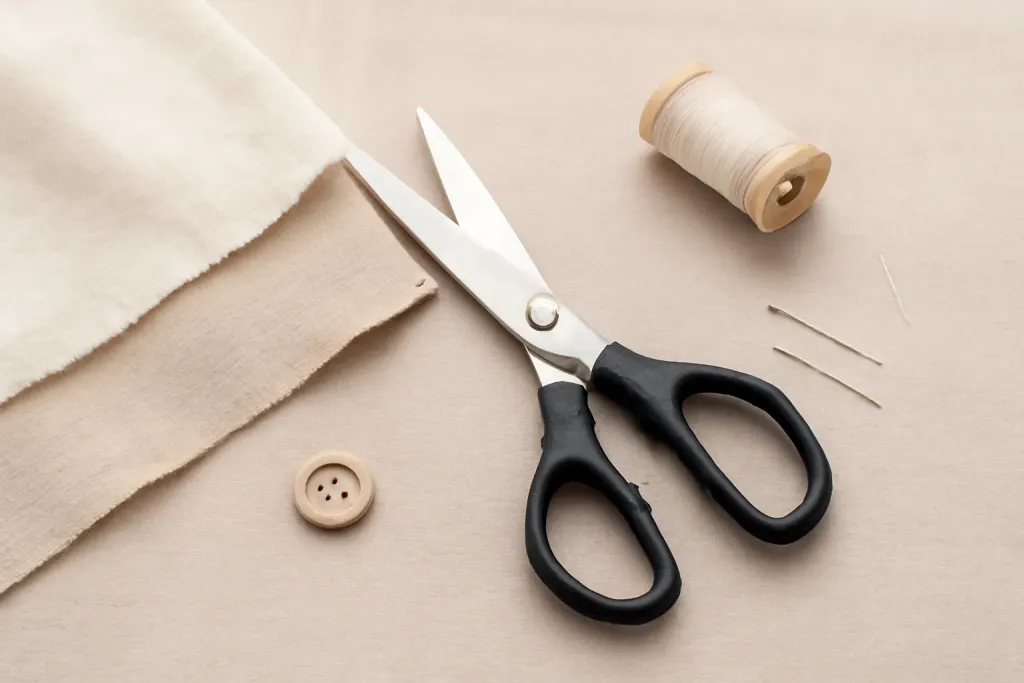
Handle style can make or break comfort for small hands. Some shears have offset handles, where the finger and thumb rings are positioned to keep the blades lower and the knuckles higher. This can be helpful when cutting on a table because it may reduce the need to bend the wrist upward. For many sewists, that feels easier and more natural.
Other shears use a more traditional straight handle. These can be simple and familiar, especially if you are transitioning from general household scissors. The best choice depends on how your hand opens and closes around the tool. If the holes are too large, your fingers may feel lost inside them. If they are too tight, the tool may feel restrictive. The right balance is the one that lets you hold the shears lightly but securely.
Some designs include a larger lower ring and a smaller upper ring, while others are nearly symmetrical. Small hands often appreciate a more compact ring shape because it gives a closer, more confident grip. If you can, imagine holding the shears in the same way you would cut fabric on a table. A comfortable shape should let you keep your elbow relaxed and your wrist from straining.
For beginners, it can help to choose a style that feels intuitive rather than complicated. Fancy features are not always necessary. A simple, well-made handle that fits your hand can be more useful than a tool with extra design details you do not need.
Browse our recommended products
Our featured picks refresh periodically. While we update them, our editorial guides can help you find the right pick.
See our guidesHow to Compare Common Fabric Shears Types
When shopping for the best fabric shears for small hands, you may see several types that all seem similar at first. Tailor-style shears are often larger and designed for long, smooth cuts. They may be excellent for some sewists, but a smaller hand may prefer a compact pair that is easier to guide and lift repeatedly.
Embroidery scissors and small snips are useful for detail work, thread trimming, and tiny adjustments, but they are not always ideal as a main fabric-cutting tool. If you need one pair for most projects, fabric shears with a comfortable handle and moderate blade length are usually a better starting point. Small hands often do better with tools that feel controllable during both short and medium cuts.
Pinking shears create a zigzag edge and can be fun for certain decorative jobs, but they should not replace a standard cutting pair for most sewing work. Because their blades work differently, they can also feel heavier or less comfortable. If you want a pair for general use, make sure you are looking at regular fabric shears first.
Left-handed sewists should look carefully at whether the shears are made for left-hand use or are simply ambidextrous. A truly left-handed design can make a major difference in visibility and comfort. If the tool is for a child or a very small adult hand, the same fitting principles still apply: compact grip, easy control, and a smooth cutting motion.
A Simple Fit Check Before You Buy
If you are shopping online, you may not be able to test the shears in person. In that case, use the product details as a fit check. Read the handle measurements, blade length, and grip description carefully. Look for wording that suggests comfort, control, or a smaller handle profile, but remember that those terms can mean different things from one manufacturer to another.
A useful question is whether your fingers would need to stretch to reach the holes comfortably. Another is whether the shears seem likely to rest naturally in your hand without forcing your wrist into an awkward angle. If the listing includes dimensions, compare them with a pair of scissors you already like. That comparison can tell you a lot more than a marketing phrase alone.
If you are choosing between two pairs, the one that seems easier to control is usually the better beginner choice. Many sewists think they need a larger or more aggressive tool, but small hands often benefit more from precision and balance than from size. The best tool is the one you can use confidently and repeatedly.
Remember that machines, accessories, and fabrics vary by model and manufacturer. If your project involves a particular sewing machine step, consult your machine manual before assuming a shears-related technique will work the same way for every setup.
Care Tips to Keep Shears Cutting Well
Good care helps your shears stay comfortable and effective. Keep them clean and dry, and wipe the blades if lint or sticky residue builds up. Even a very good pair can feel dull if debris gets in the way of a clean cut. Store them in a safe place so the blades are protected from bumps and accidental nicks.
Use your fabric shears only for the materials they are intended to cut. Many sewists reserve one pair for fabric only and keep another for paper or general household tasks. That habit can help maintain sharpness and preserve the smooth feel that makes a pair suitable for small hands.
If the blades begin to feel off, check whether the screw tension is appropriate according to the manufacturer’s instructions. Some shears can be adjusted slightly, but only follow the care guidance that comes with the tool. Do not attempt unsafe repairs or internal fixes. For machine-related concerns, always refer to your sewing machine manual or a qualified service resource rather than guessing.
Comfort also improves with good cutting habits. Keep fabric flat, open the blades fully only as needed, and let the shears do the work instead of forcing them through thick layers. Small hands often benefit from taking their time and making calm, measured cuts.
A Beginner-Friendly Way to Choose
If you are new to sewing, the safest and most encouraging approach is to choose a pair that feels easy from the start. Look for a manageable size, a grip that does not overextend your fingers, and a blade shape that helps you stay in control. That combination is often more useful than a flashy design or oversized tool.
Think about the projects you actually make. If you cut mostly lightweight cotton, you may want a lighter pair with good precision. If you often work on longer pattern pieces, a comfortable medium-length blade may help. If your main concern is reducing hand strain, prioritize grip fit and balance over everything else.
Most of all, trust the way the tool feels in your hand. The best fabric shears for small hands should make sewing simpler, not harder. A good pair can help you feel more confident as you learn, and that confidence often shows up in cleaner cuts and more enjoyable projects.
As you build your sewing kit, keep in mind that every machine and every fabric behaves a little differently. Check your own machine’s manual when a project or accessory calls for specific guidance, and choose tools that support safe, comfortable sewing at home.