The Short Answer
If you are comparing serger vs coverstitch do you need both, the short answer is: not always. Many home sewists are happy with one machine for a long time, while others eventually find that both tools make sewing easier, faster, and more polished. The right choice depends on what you sew most often, how you like your seams and hems to look, and how much space and budget you want to give to machines.
A serger and a coverstitch machine can seem similar because both are often linked to knit fabrics and ready-to-wear style finishing. But they do different jobs. A serger trims, stitches, and finishes seam edges in one pass. A coverstitch creates professional-looking hems and topstitching that stretch with the fabric. For many beginners, that difference is the key to deciding whether one machine is enough or both will truly earn a place in the sewing room.
It also helps to remember that machine features vary by model and manufacturer. Your machine’s manual is the best guide for threading, tension settings, stitch options, and what materials your specific machine is designed to handle. When in doubt, check the manual before trying a new technique.
What a Serger Does Well
A serger, sometimes called an overlocker, is designed to make sewing faster and cleaner along raw edges. It typically uses multiple threads to sew a stretchy, durable seam while trimming away excess fabric at the same time. That combination makes it especially useful for garment construction, knit fabrics, and edge finishing on items that may be washed and worn often.
One of the biggest reasons sewists love a serger is the tidy interior finish. Instead of pinking shears or zigzagging every seam edge, a serger can enclose the edge in thread as it sews. This gives projects a polished look inside and out. It is especially helpful on fabrics that fray easily, since the serged edge helps keep threads from unraveling.
A serger is also great for construction speed. If you sew lots of T-shirts, activewear, leggings, children’s clothing, or casual knits, a serger can make the process feel much more efficient. It is not meant to replace every sewing machine task, though. You still need a regular sewing machine for many basics, such as buttonholes, topstitching details, zippers on many projects, and general-purpose construction.
Because sergers vary a lot, some models are better at certain fabrics or thread types than others. Always review your machine’s manual for recommended presser feet, thread setup, stitch lengths, and fabric guidelines before sewing a new material.
What a Coverstitch Does Well
A coverstitch machine is best known for hemming knit garments with a neat, stretchy finish that looks similar to what you often see on store-bought clothing. On the right side of the fabric, it usually creates one or more parallel rows of stitching. On the underside, it forms a looper thread chain that allows the hem to stretch without popping stitches.
This is why a coverstitch is so useful for T-shirt hems, sleeve hems, leggings, activewear, and decorative topstitching on stretch fabrics. It gives a professional, ready-to-wear appearance that is hard to duplicate quickly with a standard sewing machine alone. If you make a lot of knit apparel, you may find that a coverstitch is less about luxury and more about convenience and consistency.
A coverstitch can also be helpful for chain-style decorative stitching on some projects, depending on the machine. Still, it is important to know that a coverstitch is not a replacement for all hemming or construction tasks. It does not trim fabric like a serger, and it is not designed to finish seams in the same way a serger does.
Like sergers, coverstitch machines differ by model. Some are easier to thread than others, and some offer more stitch widths or thread options. Your manual should always be your first reference for setup, fabric recommendations, and safe operation.
Key Differences That Matter
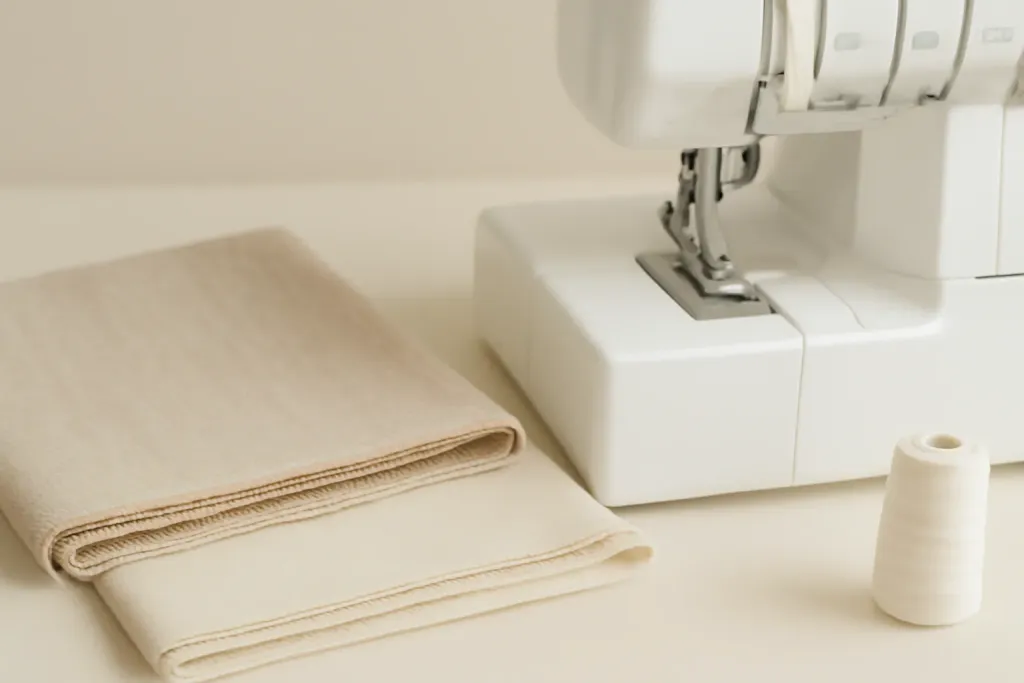
The key difference is what each machine finishes best. A serger trims, overlocks, and neatly seals raw edges in one step, making it ideal for seams, knits, and fast garment construction. A coverstitch creates stretchy hems and topstitching on the outside with looped stitching underneath, which is why it shines on T-shirts, activewear, and cuffs. If you sew both woven and knit projects, having both can be helpful, but check your machine manuals for fabric limits and setup details.
When One Machine Is Enough
For many beginners, one machine is plenty. If you mostly sew woven fabrics, simple quilts, bag projects, or occasional garments, you may not need both a serger and a coverstitch right away. A standard sewing machine can do a lot, and adding another machine too soon can create clutter and decision fatigue instead of helping you sew more.
If you want to finish seams neatly, sew knit garments, or improve efficiency on raw edges, a serger may be the most versatile first step. It handles a broad range of finishing tasks and can speed up garment construction. On the other hand, if your main frustration is hems that look homemade on stretch fabrics, a coverstitch could be the machine that makes the biggest difference.
It is also reasonable to choose neither machine at first if you are still building basic sewing skills. Learning how fabric behaves, how to measure accurately, and how to sew consistent seams will help far more than owning every specialty machine. Many sewists start with a sewing machine, then add a serger later, and only choose a coverstitch if their projects truly call for it.
The best setup is the one that supports your actual sewing habits. If your project list does not include many knit hems or serged seam finishes, one machine may be enough for now.
Browse our recommended products
Our featured picks refresh periodically. While we update them, our editorial guides can help you find the right pick.
See our guidesWhen Owning Both Makes Sense
Owning both a serger and a coverstitch makes sense when you sew garments often and want each machine to do the job it does best. If you sew a lot of knitwear, activewear, or children’s clothing, both machines can save time and help your finished items look more polished and consistent.
Here is a simple way to think about it. The serger handles construction and edge finishing. The coverstitch handles hems and visible stretch topstitching. Together, they can streamline a sewing workflow from start to finish. You might serge side seams, shoulder seams, and raw edges first, then finish hems with the coverstitch once the garment is assembled.
That said, there is no rule that says you must own both. Some sewists happily use a serger for years and hem with a twin needle on a regular sewing machine. Others rely on a coverstitch only after learning that they dislike unfinished knit hems. The best purchase is the one that solves the biggest problem in your sewing life.
Space and storage also matter. Two specialty machines can be wonderful, but only if you have a place to keep them set up or easy to access. If you have limited space, it may be smarter to start with one machine and expand later if your sewing habits justify it.
Useful Alternatives and Workarounds
You do not need a serger and coverstitch combination to sew good-looking garments. Many sewists use smart workarounds that deliver excellent results with fewer machines. A regular sewing machine, a stretch stitch, a zigzag stitch, or a twin needle can cover a lot of territory, depending on the fabric and the project.
For example, a zigzag or mock overlock stitch on a sewing machine can help finish raw edges on some projects. A twin needle can create a neat hem on knits when used correctly. Some patterns are also designed to be sewn with basic equipment, so you do not need to chase specialty tools for every garment.
If you are considering an upgrade, it may help to ask what problem you are trying to solve. Do your seams fray too much? A serger may help. Do your hems lose stretch or look uneven? A coverstitch may help. Are you simply hoping for cleaner results overall? Your current machine, combined with the right needle, stitch, and presser foot, may already be enough for many projects.
When exploring alternatives, follow your machine manual carefully. Needle type, stitch selection, and presser foot choice can make a big difference, especially on knits and specialty fabrics. If a technique is outside the limits of your machine, do not force it.
How to Decide What to Buy First
If you are still unsure about serger vs coverstitch do you need both, start with your favorite projects. Write down what you sew most often and what annoys you most about the process. That will usually point you toward the machine that gives the biggest benefit first.
- Choose a serger first if you want cleaner seam finishes, faster construction, and more confidence sewing knits or fray-prone fabrics.
- Choose a coverstitch first if your main goal is professional-looking hems on knit garments and you already like how you construct seams.
- Choose neither for now if you are still learning basics or mostly sew projects that do not require specialty finishing.
Budget, storage, and comfort level matter too. A machine that stays in the box because it feels intimidating is not a good use of money. In contrast, a machine you reach for often can make sewing more fun and less frustrating. Some sewists prefer to wait until they have a clear pattern of use before buying a second specialty machine.
If possible, compare the manuals and features of the models you are considering. Threading paths, stitch options, differential feed, presser feet, and recommended fabrics can vary widely. Since every machine is different, the owner’s manual remains the safest and most accurate guide for setup and use.
Final Thoughts: Do You Need Both?
So, do you need both a serger and a coverstitch? Not necessarily. For many home sewists, one machine is enough for quite a long time, and sometimes a regular sewing machine plus a few smart techniques is all that is needed. But if you sew garments regularly, especially knits, having both machines can make your process smoother and your results more polished.
The best answer depends on what you sew, how often you sew, and what bothers you most about your finished projects. A serger helps with seams and edge finishing. A coverstitch helps with hems and stretch topstitching. If both of those tasks matter to you, then owning both may be worth it. If only one of them matters, start there.
There is no wrong choice as long as it supports the way you actually sew. Begin with the machine that solves your biggest need, learn it well, and let your experience guide any future upgrade. And whenever you try a new machine or technique, check your own machine’s manual first so you can sew safely and get the best results possible.