Why Knits Need Special Notions
Sewing knits is beginner-friendly once you know one simple idea: stretchy fabric behaves differently than woven fabric. Instead of holding a firm shape, knits move, recover, and may curl at the edges. That means a few ordinary sewing basics still work, but the must have notions for sewing knits are the ones that help you control stretch without damaging the fabric.
The right notions can reduce skipped stitches, prevent wavy seams, and help finished garments look more polished. They also make projects like T-shirts, leggings, baby clothes, hoodies, and ribbed cuffs feel easier to manage. You do not need a huge stash to begin. A small set of carefully chosen tools will cover many beginner knit projects.
Because machines vary by model and manufacturer, always check your own machine’s manual before changing needles, presser feet, stitch settings, or thread path. The manual can tell you which accessories are compatible and which settings are recommended for stretch sewing on your specific machine.
Needles and Thread That Work With Stretch
The first place to start is the right needle. For many knit projects, a ballpoint or stretch needle is one of the most helpful notions you can own. These needles are designed to move between the loops of knit fabric rather than piercing and cutting fibers too aggressively. That can help reduce runs and skipped stitches.
- Ballpoint needles: A good everyday choice for many stable knits.
- Stretch needles: Often helpful for very stretchy fabrics such as spandex blends and athletic knits.
- Universal needles: May work on some medium-stretch knits, but a dedicated knit needle is usually a better starting point.
Thread matters too. All-purpose polyester thread is a practical staple for most knit sewing because it has a bit of give and is durable. Some sewists also like polyester core-spun thread for added strength and flexibility. If you are new, a reliable all-purpose polyester thread is a smart first purchase.
It also helps to keep a few needle sizes on hand, since lighter jersey and thicker sweatshirt fleece do not always need the same setup. Your machine manual can help you choose compatible needle types and sizes. When in doubt, test on scraps before sewing your project.
Stabilizers and Interfacing for Clean Edges
Knits often need a little extra support in places that should not stretch as much as the fabric body. That is where stabilizers and interfacing come in. These are must-have notions for sewing knits when you want necklines, shoulder seams, hems, and button plackets to look neat and stay in shape.
For beginners, fusible knit interfacing is especially useful. It can support facings, hems, waistbands, and small openings without making the fabric feel stiff. Stay tape is another helpful notion for shoulders and seams that should resist stretching over time. Clear elastic can stabilize shoulder seams, necklines, and waist seams while still allowing movement.
Some sewists also use wash-away or tear-away stabilizers for topstitching, buttonholes, or machine embroidery on knit fabric. These products can help the fabric feed more smoothly and prevent distortion. If you are unsure which support product to use, choose the lightest option that will do the job and test it on a scrap first.
Remember that not every knit needs heavy stabilization. A little support in the right places usually works better than making the whole garment rigid. Your machine manual may also suggest presser feet or stitch choices that work well with stabilizers on your machine.
Browse our recommended products
Our featured picks refresh periodically. While we update them, our editorial guides can help you find the right pick.
See our guidesCutting and Marking Tools That Make Knits Easier
Knits can shift while you cut them, so good cutting tools save time and improve accuracy. A rotary cutter is one of the most useful notions for sewing knits because it can make clean, smooth cuts through layered fabric. If you prefer scissors, sharp fabric shears are still perfectly fine; the main goal is to cut without dragging or stretching the fabric.
A cutting mat is a helpful companion to a rotary cutter, and pattern weights can keep fabric stable while you trace or cut. Weights are especially useful because pins can sometimes distort delicate knits before you even start sewing. If you are tracing patterns, a clear ruler can also help you stay accurate on curves and hems.
Marking tools deserve attention too. Look for fabric-safe tools such as washable marking pens, tailor’s chalk, or disappearing fabric markers. On many knits, fine chalk or a light touch with a marking tool is less stressful than heavy pins or rough tracing wheels. As always, test any marking tool on a scrap first to make sure it removes cleanly from your fabric.
For beginners, the biggest win is simple: cut carefully, mark gently, and avoid stretching the fabric while you work. Those habits do more for a neat knit project than most people realize.
Pins, Clips, and Holding Tools
Holding knit fabric in place can feel tricky at first because the material is soft and mobile. That is why clips and fine pins are among the most practical must-have notions for sewing knits. Many sewists prefer wonder clips or small sewing clips because they hold layers securely without creating holes in the fabric. They are especially handy on thick seams, hems, and areas where pins may slip.
If you use pins, choose fine, sharp ones and place them parallel to the seam line when possible. This can help reduce distortion and makes them easier to remove as you sew. Some knit fabrics are more forgiving than others, so you may find that stable jersey handles pins well while very delicate knits are happier with clips or fewer pin placements.
Other holding tools can also help. A pin cushion or magnetic pin tray keeps small items organized, while a seam guide can help you maintain an even seam allowance on stretchy fabric. If your sewing style includes a lot of pinning, it is worth trying a few options to see what feels smooth and efficient for you.
Beginners often worry about choosing the “perfect” way to hold knit fabric, but there is room to experiment. The best option is the one that keeps your layers aligned without stretching or puckering the fabric.
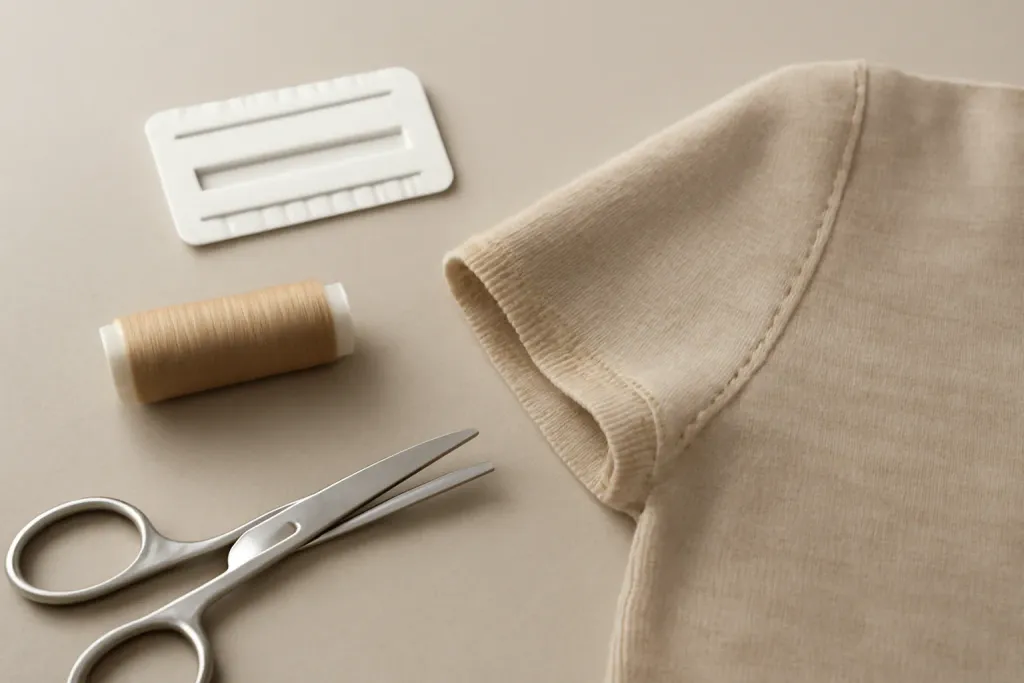
Presser Feet and Feed Control
The right presser feet make knits easier to sew. A walking foot helps feed layers evenly, while a narrow zigzag or a dedicated knit foot can improve control on stretchy seams. Start with the foot recommended in your machine manual, since models vary, and adjust pressure only if your machine allows it. If your fabric shifts or stretches, lower your speed and test on scraps before sewing the project. Simple feed control adjustments can reduce tunneling, waviness, and skipped stitches on many knit fabrics.
Elastic, Tapes, and Finishing Haberdashery
Elastic, tapes, and finishing haberdashery help knit garments keep shape and comfort. Use elastic where your pattern calls for it, and choose soft, flexible tape for waistbands, necklines, or stabilization. Check whether your knit pattern needs clear elastic, twill tape, or stay tape, and match stretch to the fabric so seams don’t wobble. For hems and edges, finishing supplies like seam binding or knit-friendly tape can make results look cleaner without adding bulk. If you’re unsure, test on scraps first and follow your pattern instructions closely.
Browse our recommended products
Our featured picks refresh periodically. While we update them, our editorial guides can help you find the right pick.
See our guidesA Simple Beginner Starter Kit
If you are building your first collection of must-have notions for sewing knits, start small and practical. You can sew many successful knit projects with just a few dependable items. A thoughtful starter kit might include stretch or ballpoint needles, quality polyester thread, clips, a rotary cutter or sharp shears, a marking tool, and one or two stabilizing options such as clear elastic or knit interfacing.
- Ballpoint or stretch needles
- Polyester thread
- Wonder clips or fine pins
- Rotary cutter or sharp fabric shears
- Cutting mat and pattern weights
- Fabric-safe marking tool
- Clear elastic or fusible knit interfacing
- Twin needle, if compatible with your machine
This set is enough to handle a wide range of beginner knit projects without overwhelming your workspace. As you sew more often, you can add specialty tools that suit the fabrics you enjoy most, such as more stabilizers, a walking foot, or additional finishing supplies.
Most importantly, give yourself permission to learn through small tests. Sew a scrap, check the results, and adjust. That steady approach will help you get more from every notion you buy.
Final Tips for Sewing Knits With Confidence
The best knit sewing results usually come from a mix of the right tools and a patient mindset. Use a needle designed for stretch fabrics when your project calls for it, choose thread that works well with movement, stabilize only where needed, and keep your fabric supported while cutting and sewing. These habits go a long way toward clean seams and comfortable garments.
It also helps to remember that no single notion solves every knit challenge. A fabric that curls at the edges may need a different approach than a soft sweatshirt fleece or a slippery athletic knit. What matters most is understanding how your chosen fabric behaves and making small, informed choices along the way.
If you are shopping for the must have notions for sewing knits, focus on tools that solve common problems: stretch control, fabric support, accurate cutting, and gentle finishing. That approach keeps your toolkit efficient and your projects approachable. And whenever you are unsure about settings, compatibility, or accessories, consult your machine manual before you begin.
With a few smart notions in your sewing basket, knit fabric becomes much less intimidating and much more fun to sew.
Why Knits Need Special Notions
Sewing knits is beginner-friendly once you know one simple idea: stretchy fabric behaves differently than woven fabric. Instead of holding a firm shape, knits move, recover, and may curl at the edges. That means a few ordinary sewing basics still work, but the must have notions for sewing knits are the ones that help you control stretch without damaging the fabric.
The right notions can reduce skipped stitches, prevent wavy seams, and help finished garments look more polished. They also make projects like T-shirts, leggings, baby clothes, hoodies, and ribbed cuffs feel easier to manage. You do not need a huge stash to begin. A small set of carefully chosen tools will cover many beginner knit projects.
Because machines vary by model and manufacturer, always check your own machine’s manual before changing needles, presser feet, stitch settings, or thread path. The manual can tell you which accessories are compatible and which settings are recommended for stretch sewing on your specific machine.
These simple habits make knit sewing feel less mysterious and far more manageable, especially when you are still learning how your fabric and machine behave together.